Steel Flanges
Stainless steel, weld-neck and forged steel flanges in multiple sizes, for pipeline connection and pressure applications.
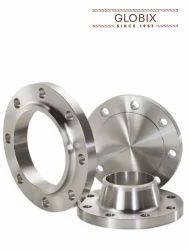
- Types
- Stainless steel, weld-neck, forged steel
- Sizing
- Multiple sizes to order — confirm nominal bore and pressure rating
- Standard
- Confirm ANSI/DIN/BS or applicable standard against your piping spec
- HS Heading
- 7307 — Tube and pipe fittings of iron or steel
Weld-Neck vs Forged Flanges
Flange type is chosen based on how it attaches to the pipe and the pressure/stress environment it needs to handle — confirm type, standard and pressure rating together, since a mismatch on any one makes the whole flange unsuitable.
Weld-Neck Flange
Has a tapered hub that is butt-welded to the pipe, giving a smoother stress transition and better performance under high pressure and cyclic loading than simpler flange types. Common in critical process piping.
Forged Steel Flange
Manufactured by forging rather than casting, giving better grain structure and mechanical strength — used across the same range of flange styles (weld-neck, slip-on, blind) where forged construction is specified for strength or code compliance.
Construction Types Available
Stainless Steel
Chosen for corrosion resistance in chemical, food-grade or marine piping systems.
Weld-Neck
Butt-welded to pipe for high-pressure, high-stress service.
Forged Carbon/Alloy Steel
Forged construction for strength and code-compliant piping systems.
Where Steel Flanges Is Used
Packaging
Steel flanges are supplied boxed or crated by quantity, in the size, pressure rating and standard specified. Confirm nominal bore, pressure class, bolt-hole pattern and applicable standard (ANSI, DIN, BS or other) before ordering — these are not interchangeable across standards without an adapter.
Common Questions
What's the difference between a weld-neck and a slip-on flange?
A weld-neck flange has a tapered hub that is butt-welded to the pipe end, giving a smoother stress transition suited to high-pressure and cyclic-load service. A slip-on flange slides over the pipe end and is welded at both the inside and outside edge — simpler to fit but generally rated for lower-stress service than weld-neck.
How do I specify the right flange standard?
Confirm which standard your piping system is built to (ANSI/ASME, DIN, BS or another national standard) along with nominal bore and pressure class — flanges built to different standards are generally not interchangeable even at the same nominal size.
Get a quote on Steel Flanges
Send your specification, quantity and destination and we will confirm pricing and lead time.
Request a Quote